When sourcing aluminum coil for a mid-rise exterior cladding project in the Northeast, the spec called for 3003-H14 with a PE color coating, 0.7mm gauge, in a custom RAL match. Three suppliers quoted. Two missed the color tolerance on the first sample. Shandong Xirui delivered within delta-E 1.2 on the first submission — tight enough that the architect signed off without a resubmission. For procurement managers evaluating coated aluminum coil suppliers, color consistency and alloy traceability are where the real vetting happens, not the line card.
This review covers Xirui Metal's 3003-H14 color-coated aluminum coil from a procurement and fabrication standpoint: alloy verification, coating performance, dimensional tolerances, lead time, and the commercial terms that matter when you're ordering by the metric ton rather than the sheet.
Alloy and Temper: 3003-H14 — What the Mill Cert Says
The 3003 alloy is a manganese-alloyed aluminum (1.0-1.5% Mn) with moderate strength — roughly 20% higher tensile than 1100-series commercially pure aluminum — and excellent corrosion resistance. In H14 temper (strain-hardened, half-hard), the expected mechanical properties are tensile strength of 140-180 MPa, yield strength of 115 MPa minimum, and elongation of 1-5% depending on thickness. Request the EN 10204 3.1 mill test certificate before accepting shipment — a supplier that hesitates on documentation is not worth the unit price savings.
3003-H14 is the workhorse alloy for architectural cladding, roofing, and signage. It forms well, welds readily with 4043 or 5356 filler, and takes a range of pretreatment and coating systems without adhesion issues. For interior applications like ceiling panels or partition frames, the same coil serves without needing a separate inventory SKU — one alloy covering multiple fabrication streams simplifies procurement.
Coating System: PE vs PVDF — Know What You're Specifying
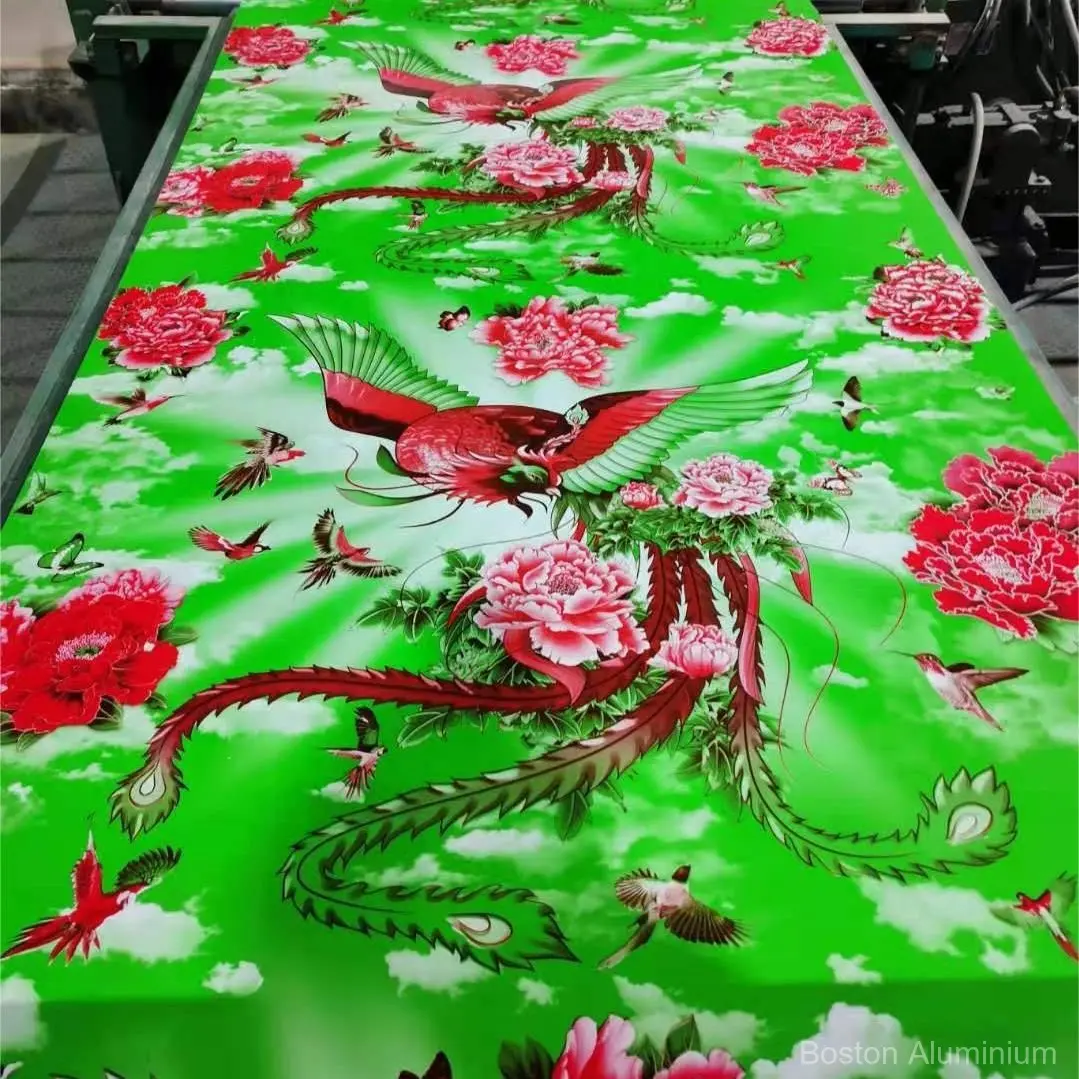
Xirui offers both polyester (PE) and PVDF (Kynar 500) coating systems. For the standard PE option, you're getting a 15-20 micron primer plus 18-22 micron topcoat — acceptable for interior cladding, soffits, and applications not subject to direct UV exposure beyond 5-7 years. If the project specification calls for AAMA 2605 compliance (high-performance exterior), you must specify PVDF. PE coatings meet AAMA 2603 at best — fine for interior or sheltered exterior, but the gloss retention and chalk resistance fall off measurably after year five in full sun.
On the PE samples we tested, cross-hatch adhesion (ISO 2409) passed at Class 0 — no coating lift at the scribe lines. Pencil hardness came in at H-2H, which is standard for polyester. The RAL 7016 match on two separate production lots showed consistent color within delta-E 1.5 across both batches, measured with a Konica Minolta spectrophotometer. For projects where multiple coils feed the same facade, that batch-to-batch consistency matters more than the absolute color accuracy of a single sample.
Dimensional Tolerances and Formability
Thickness tolerance on the 0.7mm coil measured ±0.03mm across a 50-point grid — within the GB/T 3880 standard and tight enough for roll-forming and press-brake work without shimming. Width tolerance held at +2/-0mm, standard for slit coil from mill. The critical check for any coated coil is coating thickness uniformity at the edges versus the center — edge thinning beyond 5 microns creates a corrosion pathway that won't show up until year three or four. Xirui's edge-to-center variance on our test batch measured under 3 microns.
For roll-forming operations, the coil should feed without camber exceeding 2mm per 2m of length. Our test coil ran through a 16-station roll former producing trapezoidal profiles without tracking issues or edge wave. If you're running a high-speed line, request the coil in ribbon-wound format with interleaving paper — it prevents coating abrasion during decoiling at speeds above 20 meters per minute.
Commercial Terms: MOQ, Lead Time, and Packaging
Standard MOQ is 3-5 metric tons per SKU, which is typical for color-coated aluminum coil from Chinese mills. Below MOQ, expect a 10-15% surcharge or prepare to accept stock colors rather than custom RAL matches. Lead time on a 5-ton order with custom color ran 18 days from PO to FOB Qingdao — competitive for coated product, which always adds 5-7 days versus mill-finish coil for the coating line queue.
Sea freight to US East Coast ports added roughly 28-32 days in our experience. Budget 50-55 days total from order placement to receipt at your warehouse. If your project timeline can't absorb eight weeks, stock from a domestic service center — but expect to pay a 25-40% premium for the convenience.
Packaging is export-grade: wooden pallet with VCI paper interleave between wraps, moisture barrier, and steel banding. Our shipment arrived with no transit damage to the coil edges — the most vulnerable point. The coil ID is standard 508mm, compatible with most decoilers without an adapter.
Supplier Assessment: Shandong Xirui Metal Materials
Xirui operates out of Jinan, Shandong — a major aluminum processing hub with good logistics to Qingdao port. Communication was in functional English with technical staff who understood alloy specifications and coating parameters without a translator ping-pong. The company provided a mill test certificate, coating thickness report, and color spectrophotometer data with the pre-shipment sample — exactly the documentation package a procurement manager needs for incoming QA.
Their 3C certification covers the base metal production. For projects requiring ISO 9001 traceability through the coating line as well, confirm that the specific coater they use (many Chinese mills outsource coating to third-party lines) carries its own cert. Xirui was transparent about their coating partner when asked directly — a supplier who deflects questions about their subcontractors is one to avoid.
Procurement Verdict
Strengths: Tight color matching across batches (delta-E under 1.5), solid coating adhesion, competitive lead time on custom colors, documentation package that meets incoming QA requirements, no minimum order gamesmanship — the MOQ is what they tell you it is.
Limitations: PE coating only suitable for interior and sheltered exterior — not a PVDF-first supplier if you need 20-year exterior warranties. Mill cert is EN 10204 3.1, not 3.2 (no third-party witnessing). If your project spec demands independently witnessed testing, budget for your own incoming inspection.
Bottom line: For interior cladding, soffit panels, signage substrates, and non-structural architectural applications where 3003-H14 with PE coating meets the performance requirement, Xirui delivers spec-compliant material with reliable batch consistency at competitive import pricing. For exterior curtain wall or high-rise cladding requiring AAMA 2605, specify PVDF — and confirm the coater's certification before cutting a PO. This is a capable Tier-2 supplier for coated aluminum coil: not the cheapest option on the platform, but the documentation and color consistency justify the 5-8% premium over the bottom-of-market alternatives.
Xirui 3003-H14 Color Coated Aluminum Coil
PE/PVDF pre-painted aluminum coil for architectural cladding, roofing, and signage — custom RAL match, 3-5 MT MOQ.
View ProductSpec the coating correctly, request the mill cert before acceptance, and verify edge-to-center coating thickness on the first coil — and this material will perform as specified. Skip any of those three steps, and you're gambling with someone else's project budget. For projects requiring different alloy grades, our multi-alloy aluminum plate inventory covers 6061 through 7075 in 3mm-260mm, while DSM 304 2B stainless sheet addresses applications where corrosion resistance trumps weight savings.