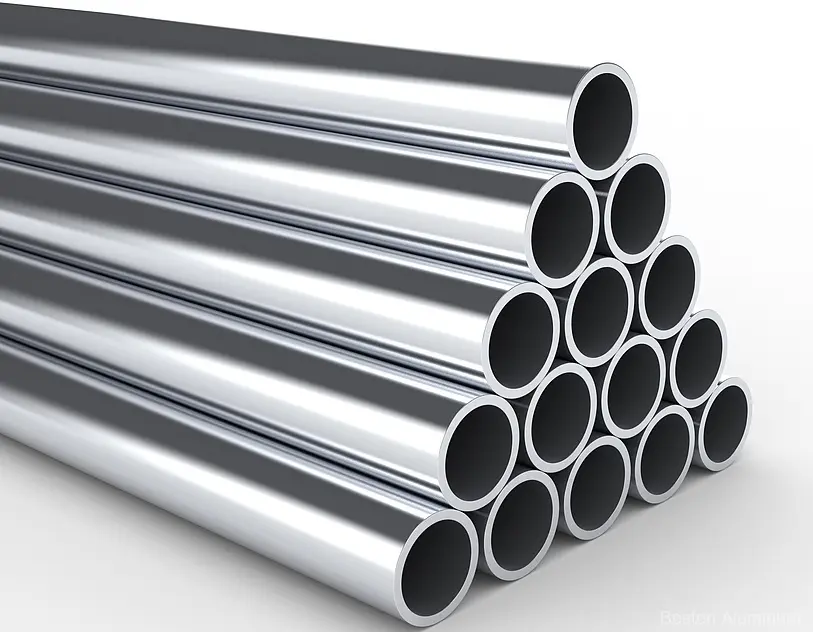
When sourcing stainless steel pipe for a chemical processing expansion last quarter, the spec called for Schedule 80 wall thickness across three grades — 304 for general process piping, 316 for the acid-handling lines, and 904L for a high-temperature reactor feed. Finding a single supplier that could quote all three from inventory rather than mill lead times was the bottleneck. Shandong Zhongxuan Metal Materials quoted the full package within 48 hours with mill test reports for each grade. Material arrived in standard export seaworthy packing, MTCs matched the heats, and the pipe welded cleanly without porosity on the first qualification coupon.
Zhongxuan supplies stainless steel pipe in a grade range that spans 201 through 904L, with ASTM A312/A269/A213 compliance across the line. The Schedule 80 wall offers a 40% thicker cross-section than Schedule 40 at the same nominal diameter — critical for pressure-rated systems and threaded connections where wall reduction from thread cutting must be accounted for in the design margin. Production capacity of 300,000 tons per year and 5-15 day delivery windows suggest a streamlined mill-to-warehouse pipeline rather than a trading company that drop-ships from third-party inventory.
304 vs 316 vs 904L — When Does the Grade Premium Justify Itself?
Grade selection is the single largest cost driver in a stainless pipe procurement, and the decision tree is worth walking through in detail. 304 is the workhorse for indoor process piping, potable water, and structural applications where chlorides are absent. At roughly 2,400-2,800 USD per ton FOB, it is the most economical stainless option. The 18% chromium content provides adequate oxidation resistance up to about 870°C intermittently.
316 adds 2-3% molybdenum, which is what gives it the chloride pitting resistance that 304 lacks. If your application involves any chloride exposure — seawater cooling loops, chemical washdown stations, food processing with saline brines — the jump from 304 to 316 is not optional; it is the difference between a 5-year and a 20-year service life. The premium is roughly 15-25% over 304 on a per-ton basis, but that premium buys you a pipe that will not develop pinhole leaks at the heat-affected zone two years into service. For marine and coastal installations, 316 is the minimum acceptable grade; 304 will show rust bloom within months.
904L is a different animal entirely — a high-nickel, high-molybdenum super austenitic grade designed for severe service: sulfuric acid concentrations up to 50% at ambient temperature, phosphoric acid processing, and seawater-cooled heat exchangers where even 316 shows stress corrosion cracking. The cost premium is substantial — roughly 3-4x 304 on a per-ton basis — but so is the alternative: unplanned shutdowns in a continuous process environment where a single day of lost production dwarfs the material cost delta. Zhongxuan's ability to supply all three grades from a single source simplifies the procurement logistics and keeps the mill cert paperwork in one consistent format.
Seamless vs Welded — Which Construction for Which Application?
The seamless versus welded decision comes down to pressure rating, inspection requirements, and cost tolerance. Seamless pipe, produced by piercing a solid billet and drawing it to final dimensions, eliminates the longitudinal weld seam that is the weakest point in any pressurized system. It is mandatory for high-pressure steam, boiler tubes, and any application governed by ASME B31.1 power piping or B31.3 process piping codes where the design pressure exceeds the allowable stress of welded pipe at the operating temperature.
Welded stainless pipe is produced by roll-forming strip or plate and welding the seam, typically with TIG or laser welding followed by bead conditioning. Modern welded pipe from a mill with proper inline NDT — eddy current or ultrasonic — is entirely adequate for low to moderate pressure applications and costs 30-40% less than seamless in equivalent grades and sizes. For structural handrails, low-pressure water lines, and architectural exposed piping, welded is the cost-effective choice. Zhongxuan offers both constructions across most grades, which allows mixing seamless and welded pipe on the same PO depending on the service classification of each line.
Supplier Qualification — What to Verify Before Committing to a Volume Order
Ordering stainless pipe from an overseas supplier introduces variables that do not exist with domestic mill-direct purchasing: material authenticity, cert traceability, and shipment condition. Request a copy of the supplier's ISO 9001 certificate and verify it against the issuing body's online database before issuing a PO. Zhongxuan holds SGS, BV, IQI, TUV, and ISO certifications — the TUV cert is independently verifiable and carries genuine weight in European and North American procurement audits.
The mill test certificate should list heat number, chemical composition, mechanical properties (yield, tensile, elongation), and the applicable ASTM specification. Cross-check the heat numbers against the physical markings on the pipe upon receipt. A supplier that hesitates to provide MTCs before shipment is not worth the risk, regardless of price. For critical applications, budget for third-party inspection at the port of loading — SGS and BV both offer pre-shipment inspection services that verify quantity, marking, and dimensional compliance against the PO. The cost is typically 500-1,500 USD per container depending on scope, and it is the cheapest insurance policy available against receiving the wrong grade.
Pricing, Lead Time, and Logistics
Stainless pipe pricing is a function of three variables: grade, dimensions (OD and wall), and quantity. Expect FOB pricing in the range of 2,400-3,200 USD per ton for 304, 2,800-3,800 USD for 316, and 8,000-12,000 USD for 904L, with significant volume breaks at the 10-ton and 50-ton thresholds. Zhongxuan quotes EXW, FOB, CFR, and CIF — if you have an existing freight forwarder relationship, FOB gives you control over the ocean leg. If this is a one-off procurement, CIF to your nearest container port simplifies the logistics to a single invoice.
Standard delivery windows of 5-15 days are realistic for inventory items. Custom dimensions or non-stock grades add 2-4 weeks of mill production time. Sea freight from Shanghai to US West Coast ports runs 15-20 days; East Coast adds another 7-10 days via Panama. Build a 45-60 day total lead time into your project schedule — 2 weeks production, 3 weeks ocean freight, 1 week customs and drayage to site. For urgent requirements, air freight is available but multiplies the logistics cost by roughly 5-8x, which rapidly erases any per-ton savings over domestic sourcing.
Procurement Verdict
Strengths
- Grade range covers the full stainless spectrum — 201 through 904L, including duplex grades — from a single supplier, eliminating the need to qualify multiple vendors
- Both seamless and welded construction available, with ASTM A312/A269/A213 compliance and traceable MTCs
- TUV and SGS certifications are independently verifiable — the TUV cert in particular carries audit weight in Western procurement frameworks
- Schedule 80 wall thickness stocked across common diameters, reducing the need for custom mill runs on pressure-rated systems
- FOB, CFR, and CIF terms available — the flexibility to use your own forwarder or take a delivered price simplifies budget planning
Considerations
- Production is centered in Wuxi and Shandong — lead times are real and customs clearance adds an unpredictable 5-10 business days at the destination port
- Third-party inspection at the loading port is recommended for critical applications — factor the 500-1,500 USD cost into the total procurement budget
- 904L pricing is volatile due to nickel market exposure — get a fixed quote valid for 30 days and lock it in quickly
- Minimum order quantities apply — expect 1-2 ton minimums for mixed-grade orders; single-grade spot buys below 500 kg may not be economical after freight
The assessment: For a procurement manager sourcing stainless pipe for a mid to large-scale industrial project, Zhongxuan offers a defensible balance of grade availability, cert documentation, and per-ton pricing. The supplier is not the cheapest option in the Chinese market, but the combination of TUV-certified production, consistent MTC traceability, and the ability to bundle 304/316/904L on a single PO eliminates the hidden costs of multi-supplier qualification and split shipments. For projects where material documentation must survive a third-party audit, the cert chain justifies the moderate premium over uncertified spot-market pipe. Recommended for process piping, chemical transfer, marine cooling, and pressure systems where Schedule 80 wall is specified.
Stainless Steel Pipe — 304 / 316 / 904L Schedule 80
Seamless and welded stainless pipe, ASTM A312 compliant, stocked in Schedule 80 wall across 201-904L grades.
View ProductTechnical specifications as supplied by the manufacturer:
| Product Specifications | |
|---|---|
| Supplier | Shandong Zhongxuan Metal Materials Co., Ltd. |
| Grades Available | 201, 202, 303, 304, 304L, 316, 316L, 310S, 316Ti, 321, 430, 904L |
| Standards | ASTM A312, A269, A213, A249; ASME SA312, SA269, SA213 |
| OD Range | 6 mm – 273 mm |
| Wall Thickness | 1 mm – 30 mm (Sch 5, 10, 40, 80, 80S, 160) |
| Construction | Seamless and welded options |
| Certifications | SGS, BV, IQI, TUV, ISO |
| Trade Terms | EXW, FOB, CFR, CIF |
| Production Capacity | 300,000 tons/year |
| Delivery | 5-15 days (stock), 2-4 weeks (custom) |
For projects where Schedule 80 stainless pipe with full cert traceability is a non-negotiable specification requirement, this supplier warrants a quote request. Request current MTCs for the specific heat and grade before issuing a PO, and budget for SGS pre-shipment inspection on orders above 10 tons. For flat-product requirements in the same grade family, our DSM 2B 304 stainless steel sheet review covers cold-rolled sheet sourcing with similar cert requirements. If your project spans multiple material types, the DX51D galvanized coil guide covers complementary coated-steel procurement for structural and cladding applications.