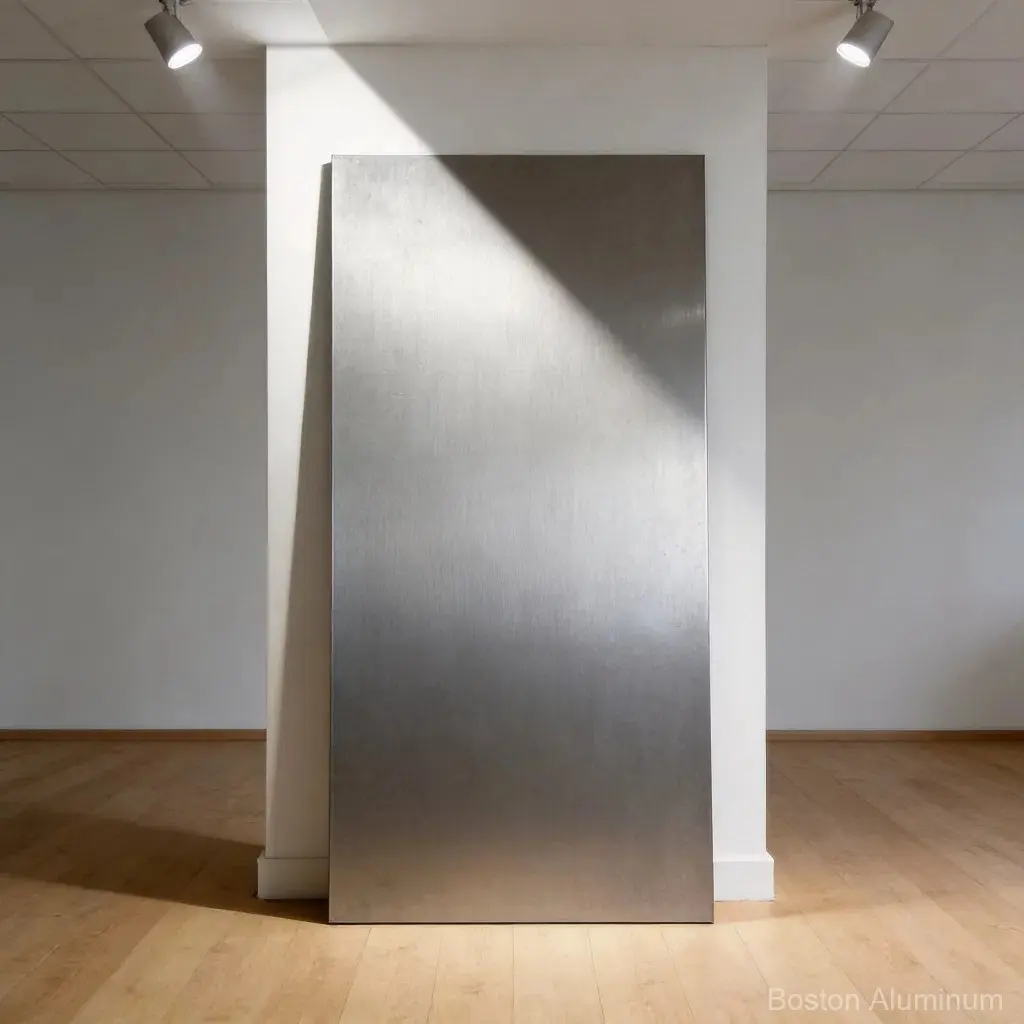
When a Galveston coastal fabrication shop contacted us regarding pitting corrosion damaging their 304 stainless panels, deployed not even 2 years prior, the answer was almost instantaneous: chloride attack on the wrong grade. Rather than opting for 316L, the fabrication shop used 304 to cut costs by about $12,000. The total cost of substandard corrosion resistant stainless steel included $47,000 in rework and lost productivity due to 3 weeks of replaced panels. That’s putting “just use 304” into perspective.
Put the price difference per sheet out of your mind. Molybdenum is what matters. If your install site is within five miles of the coast. If your process involves saline or chlorides or if you face strict regulatory limits, stop thinking 304 is the budget option. You're just putting off the bill until the metal fails.
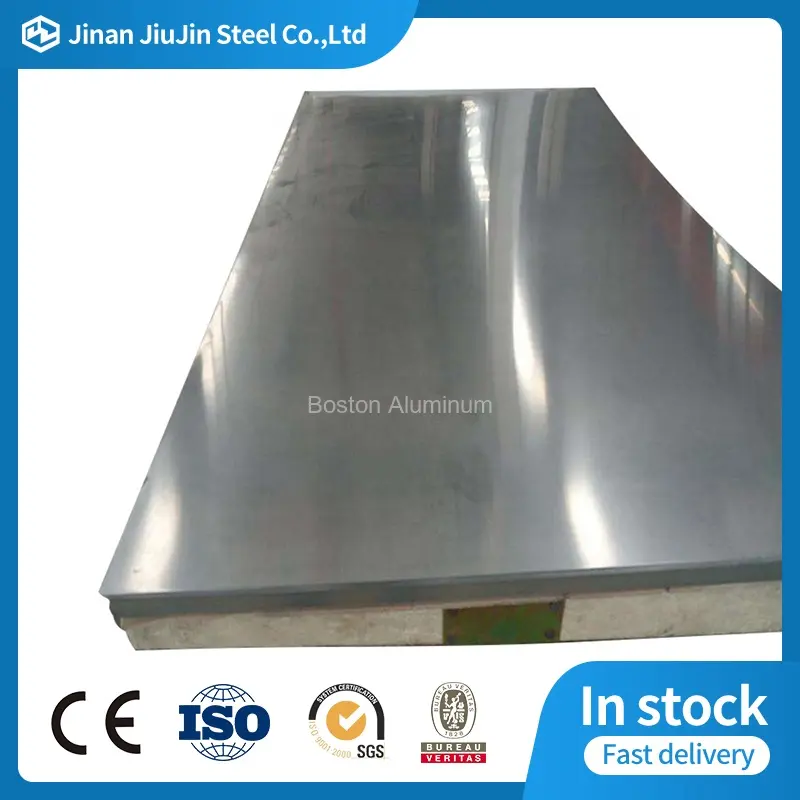
We sourced 316L sheets that comply with ASTM A240 standards from Jiujin Steel. A Made-in-China supplier with ISO 9001 certification and third-party SGS tests available, here’s what procurement teams should know before ordering.
The Real Cost of Using the Wrong Stainless Grade
Here's the actual difference: standard 304 has almost no molybdenum, and 316L contains 2.0–3.0%. It’s actually that 2-3% that leads to the creation of a passive oxide layer that resists chloride ion attack and thus helps in the prevention of pitting corrosion in marine and chemical and food-processing environments.
A pit doesn't only mean an unsightly rust spot, it means trouble for the integrity of your structure. In cyclic loading, that's where your fractures will begin. In the food and pharma, it's a different story. Bacteria can inhabit pits and your sanitizers won't get to them, causing an immediate failure of FDA or ISO compliance. In pharmaceutical clean rooms, ISO 14644-1 is also failed due to the peeling of rusted particles from corroded surfaces. When your QA team fails an audit because you tried saving money buying 304, that discount you received is a laughable amount compared to the cost of the audit.
This is what you can expect if you make a mistake in the field:
Coastal architectural cladding: Salt spray and onshore winds from the ocean cause chlorides to settle on panels. 304 begins to visibly pit after 12 to 24 months if the panels are located within 5 miles of the ocean. 316L shows no significant change after 10+ years. The 304 to 316L cost comparison is influenced by these factors: a mid-rise with 2,000 square meters of stainless cladding has a replacement cost that is typically 3-5 times the cost of the 316L cladding (considering scaffolding, labor, and business disruption).
Chemical storage tanks: Chloride contamination in the process fluids concentrates at the liquid-air interface inside tanks. 304 tank walls develop through-wall pits after 3 to 5 years of exposure, while 316L tanks in the same service exhibit no measurable wall loss after 15 years. The only difference between the two situations is one planned shutdown for the tank replacement costing $80,000 to $150,000, while the other has several unplanned shutdowns.
Food processing conveyors: The combination of saline brines, acidic cleaning solutions, and 24/7 wet operation makes food processing one of the most aggressive environments for stainless. 304 conveyor components in a poultry processing line showed pitting at weld zones within 6 months. Switching to 316L eliminated the issue and passed the facility's next USDA inspection without citation. The 316L premium was roughly $8,000 — less than the cost of one failed inspection.
What Makes 316L Different — Molybdenum and the PREN Formula
The Pitting Resistance Equivalent Number (PREN) is a formula for assessing the pitting resistance of various grades of stainless steels. PREN = % Cr + 3.3(% Mo) + 16(% N). Grade 304 is given a PREN of 18-20 and Grade 316L a PREN of 24-28. The difference in PREN is attributed to the differential presence of Mo and is indicative of a performance difference. Therefore, it can be said that Grade 316L will start to pit in a chloride solution that is about 10 times more concentrated than that required to cause pitting in Grade 304, under the same conditions.
The low carbon designation of stainless steel 316L makes fabrication easier. Stainless steel 316 has a carbon content of 0.08% while the content in 316L is 0.03%. Due to the higher carbon content in the 316 standard, it is susceptible to sensitization, which is where chromium carbides form along the boundary of the grains. The standard also is prone to intergranular corrosion. Given that standard fabrication thickness is about 20mm, 316L is also resistant to sensitization. If your design contains welded assemblies, 316L is the least you should specify in stainless steel.
The Jiujin Steel product encompasses all steel grades 201, 202, 304, 304L, 316, 316L, 321, 309S, 310S, and 316Ti — one supplier for all. When various grades are needed for different parts, such as 304 for structural frames and 316L for chemical-contact surfaces, using one supplier helps simplify the tracking of mill certs and quality documentation.
Grades and Finishes: What to Spec for Your Application
2B Finish: For heavy-duty work, this finish cannot be beaten. Its smooth, matte-gray sheen is the result of a cold rolling, annealing, and pickling combination. Resisting particle adhesion means it should always be your go to for GMP environments.
BA (Bright Annealed): This finish is annealed in a controlled atmosphere furnace instead of being pickled. This provides a finish that is bright and reflective. This is most commonly used in architectural panels and trim pieces. This finish is commonly used in any application that would have contact with the end user. The BA finish is approximately 15-25% more than 2B finishes, but eliminates the need for additional polishing. BA finishes are available in gauges ranging from 0.3mm to 2.0mm.
No. 4 Finish: Characterized by a uniform directional grain, resulting from an application of 150-180 grit abrasive. Standard specification for various architectural elements and fittings including elevator interiors, column wraps, and retail fixtures. The directional grain provides a concealment of fingerprints and scratches, a requirement for surfaces located in highly frequented public areas. Available in 0.5mm to 3.0mm.
Hot-Rolled: Used for structural applications that are not concerned with surface finish like I-beams, channels, heavy plate, and weldments. Available in 316L from 3mm up to 100mm. Hot-rolled sheet has a rougher surface than cold-rolled. For heavy-gauge applications, rolled sheets cost 20-30% less for the same thickness.
Sourcing 316L: Mill Certs, Tolerance, and Supplier Verification
Three documents matter when source 316L stainless sheet in China, none of which include. price quote.
Mill Test Certificate (MTC) to EN 10204 3.1: This is the material's birth certificate. It will include the heat number, the chemical composition (with molybdenum content confirmed to be 2.0-3.0%), mechanical properties (tensile, yield, elongation) and the name of the independent inspection body. If this supplier does not issue EN 10204 3.1 certificate, they must be eliminated from the vendor list. A 3.2 certificate (with third-party witness testing from SGS, BV, or TUV) is better and is worth the request for critical applications.
Thickness Tolerance Verification: For sheets that are 1.5mm thick and 1,219mm wide, ASTM A240 allows a thickness tolerance of ±0.14. Jiujin Steel claims a tolerance of ±0.05 for sheets that are less than 3mm and are cold-rolled. Request a tolerance guarantee, and in the purchase order, state that if 10% of the sheets in a shipment are under the nominal thickness by more than the agreed tolerance, the supplier must replace the sheets free of charge.
XRF Verification on Receipt: Handheld XRF analyzers check alloy composition in 30 seconds per sheet. These analyzers are limited in that they cannot check for carbon (the "L" in 316L), but they do identify the presence of molybdenum in the 2.0-3.0% range, thus distinguishing 316L from 304 for certain. Budget $15-25 per sheet for third-party XRF spot-checking on 10% of the order, assuming you do not have an in-house analyzer. For an order of 200 sheets, this is $300-500 to verify against a $20,000-30,000 material spend. This amounts to a 1.5-2.5% insurance spend, which is hard to argue against.
Jiujin Steel 316L Stainless Steel Sheet
ASTM A240 grade 316L with 2B, BA, No. 4 finish cold rolled stainless steel sheets from 0.1 mm to 3 mm, with ISO 9001 and Mill certificates.
View on Made-In-China →When 304 Still Works — and When It Doesn't
304 is actually an acceptable grade. It works with 80% of steel applications. The problem is, does your application fall into the 20% in which 304 will fail?
| 304 vs 316L: Application Suitability | ||
|---|---|---|
| Environment | 304 OK? | Reason |
| Indoor architectural (dry) | Yes | No chloride exposure, atmospheric only |
| Freshwater plumbing | Yes | Chloride levels typically under 50 ppm |
| General fabrication (indoor) | Yes | No aggressive chemical contact |
| Coastal (within 5 miles) | No — use 316L | Airborne salt deposits cause pitting within 12-24 months |
| Chemical processing | No — use 316L | Process chlorides concentrate at liquid-air interfaces |
| Food processing (saline) | No — use 316L | Brine solutions, acidic cleaners, USDA/FDA inspection risk |
| Pharmaceutical cleanroom | No — use 316L | Aggressive CIP (clean-in-place) chemicals, particle shedding standards |
| Marine (direct saltwater) | No — use 316L or duplex | Continuous immersion requires molybdenum or duplex grades |
| Swimming pool environment | No — use 316L | Chlorinated atmosphere causes stress corrosion cracking in 304 |
In-depth related materials contained in other posts: cold-rolled 304 for industrial fabrication can be found in our DSM 304 2B review, stainless finishes of architectural-grade metals can be found in our review of Grand Metal PVD hairline, and aluminum checker plate vs alloy sheets for structural applications can be found in our comparison of the best industrial metal sheets.
Procurement Recommendation
What Jiujin Steel 316L does well: This steel allows for multiple grades to be obtained from a single supplier. Steel grades 304, 321, and 316L which correspond to structural, high-temperature, and corrosion-critical components, respectively, can all be supplied in a single purchase order. Jiujin Steel 316L is ISO 9001 certified and has third party testing done by SGS, which provide assurances against one of the largest concerns of sourcing stainless from China, which is the lack of a verifiable composition. Jiujin Steel also has a thickness tolerance of ±0.05mm, which is especially important in cases where the steel will be used to feed into an automated steel forming system, since the tolerance is also tighter than the ASTM A240 standard.
Things to Check Before Ordering: 1. In EN 10204 3.1 mill certificates, the listing of molybdenum must be in the range of 2.0-3.0% with no room for variation. If the listing is "typical" or "approximate," a 3.2 certificate with third party witnessed testing must be provided. 2. Check packing specifications. To avoid scratches due to friction in transit, sheets must have interleaved paper or PE film. This is significant for BA and No. 4 finishes. 3. Custom thicknesses usually have 15-25 days lead time. Stock sizes have 7-10 days lead time.
The key point: The pain of a 40-50% markup on 316L on the first PO is worth it when balancing the risks of salt, chemicals, or cleaning and sanitation standards. When the environment calls for 316L, pay for it and check your mill certs at the loading dock. Otherwise, be prepared for your quarterly review to explain how your "cost-savings" measures resulted in the production line being shut down.